World Series roofs make local ground rules part of the viewing guide
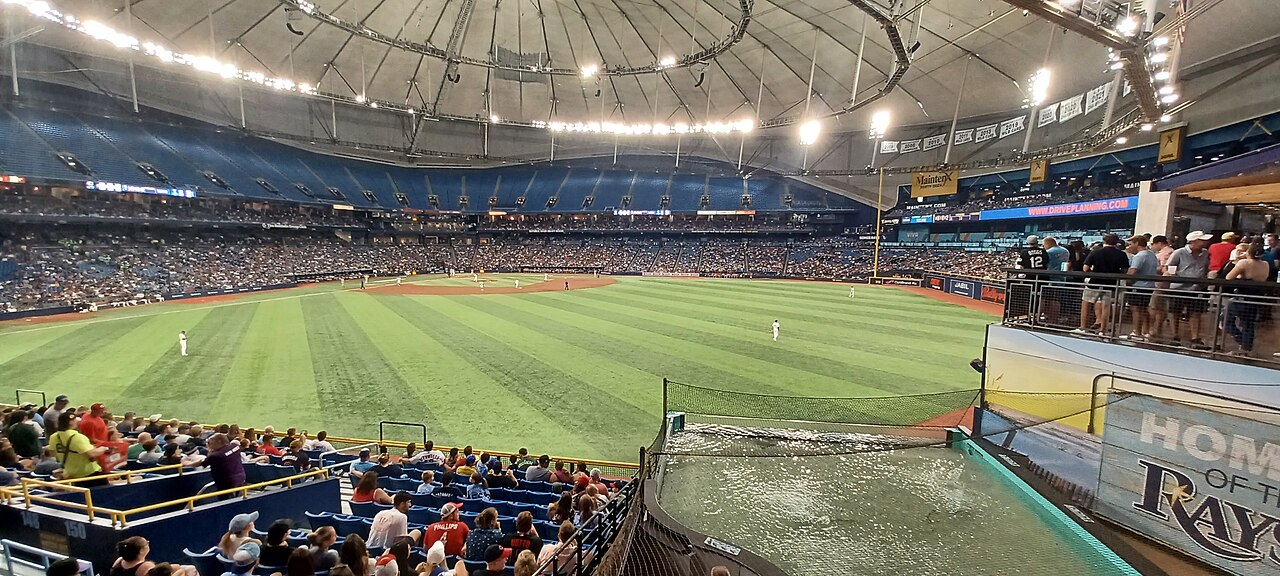
Milwaukee and Tampa Bay bring different covered-ballpark environments to the World Series. ESPN's explanation notes that American Family Field has a retractable roof while Tropicana Field has a permanent one.
High fly balls can interact with cables or overhead structures, making the venue's specific ground rules important. A similar-looking contact in two parks does not necessarily receive the same treatment, and the crew's ruling has to follow the rules for that location.
The source gives American Family Field's roof a span of 600 feet and an apex 330 feet above the playing surface. Tropicana Field's roof is lower, with a reported peak 225 feet above the infield. Those physical differences help explain why one general description of a covered park is not enough.
The recent postseason examples were concrete: a Ty France fly ball struck a cable in Milwaukee, while a Spencer Jones pop-up contacted a catwalk in Tampa Bay. Both returned to play for outs in the source account. The interesting point is the specific interaction between a ball and the structure, rather than an assumption that every roof contact produces a special outcome.
For viewers, the useful preparation is understanding the park rather than assuming every unusual bounce is a mistake. The stadium is part of the field of play. In a tight postseason game, knowledge of its conditions can be as relevant as the familiar dimensions of the outfield.